
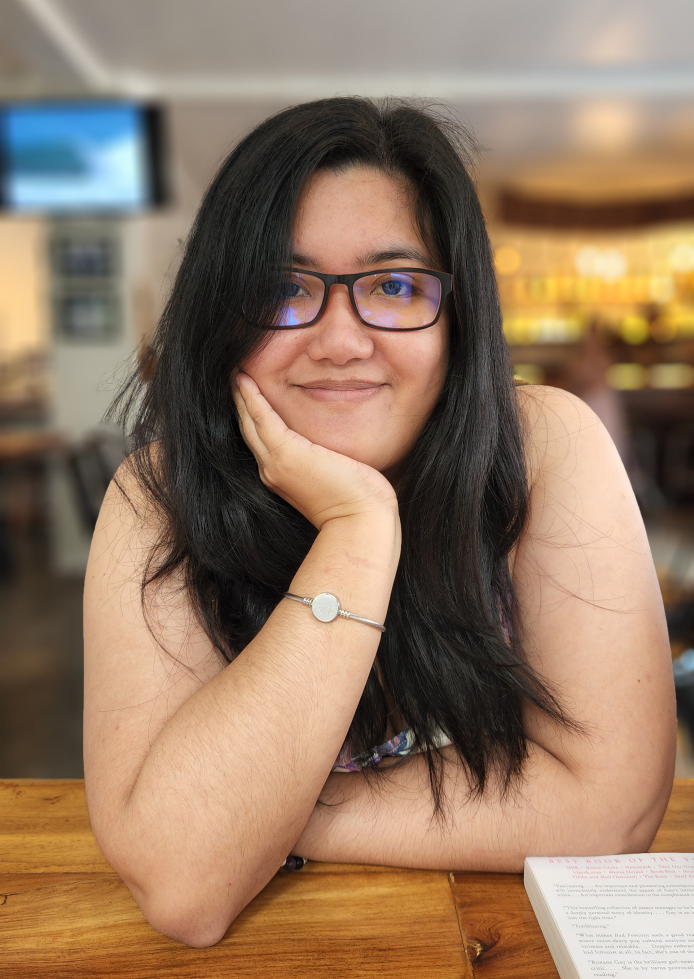
Let’s meet the panelists for “Humanity in Stories”, a written panel scheduled for upload sometime mid-May 2026. A brief introduction on how this came about can be found here.
Vida Cruz-Borja is a fantasy and science fiction writer and editor. Her short stories and essays have been published in F&SF, Fantasy, Strange Horizons, PodCastle, and various anthologies. She won the 2022 IGNYTE Award for Best Creative Nonfiction for “We are the Mountain: A Look at the Inactive Protagonist” and the Philippine National Book Award for Best Fiction in English for her illustrated short story collection Song of the Mango and Other New Myths (2022). Her latest book is the fantasy and horror novella Mirror Marked (2025). She is affiliated with the editorial groups Tessera Creatives and The Darling Axe, and she is the owner of Arcane Oblong Editorial and Design. Vida lives in Manila with her husband, daughter, and their dogs.
“So before, especially among young Filipino writers, all we had to deal with was decolonizing our perspectives and mentalities in our writing. That includes favoring white characters in western settings and giving them ways of solving problems that would absolutely not fly in our culture. I’ve written a whole essay about this last one in particular. All we had to do was grapple with our “Filipinoness” and what constituted being Filipino anyway (spoiler alert: by virtue of being Filipino, what you write is already Filipino).
Now, I’ve also seen the rise of what has been called TV brain writing.” This happens when the writer unthinkingly transcribes what is occurring in a video playing in their mind. So you’ve got a decidedly noticeable lack of interiority in the story, which becomes a mere collection of actions and dialogue, and occasional descriptions that don’t do much except bog down the narrative’s pace. Don’t get me wrong, I’ve borrowed certain techniques from visual mediums before—and everyone is free to do that—but the lack of interiority is startling because we don’t get to pause the narrative. We don’t get to dwell on a character’s hopes, dreams, fears, etc. Which is a shame because that’s a huge part of what makes us all human and what makes a reader feel “seen” when they read a good book.”