
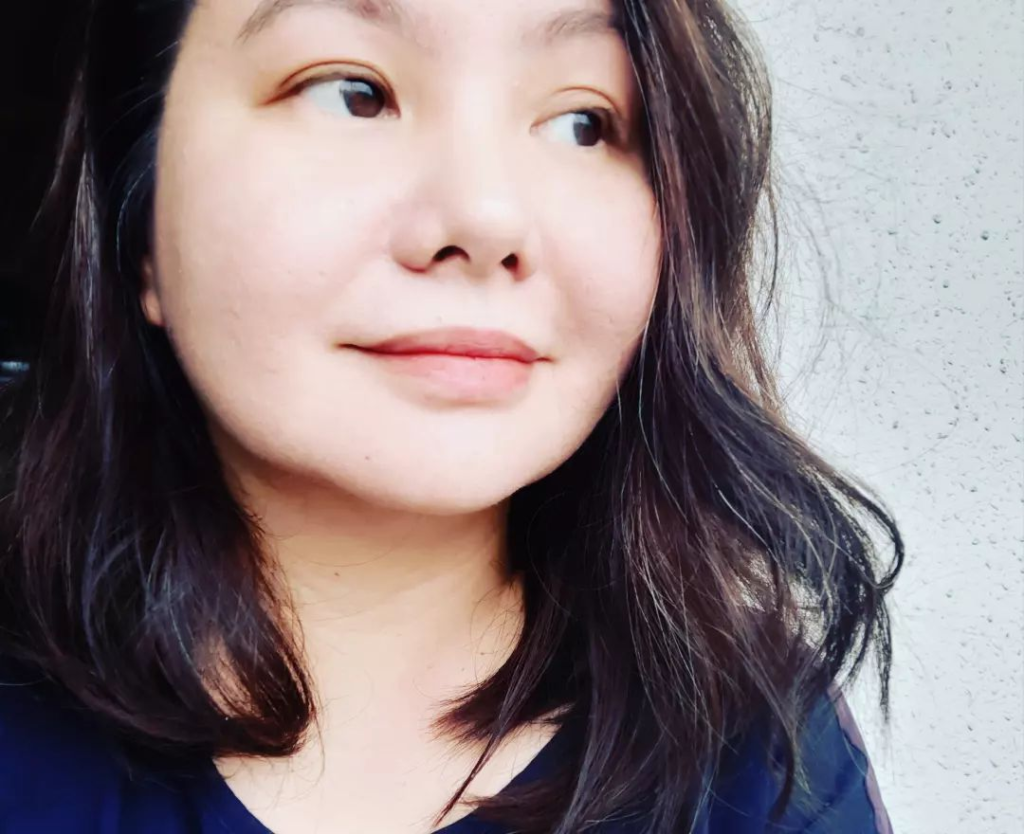
Guest-editor Mina V. Esguerra
Hello to the readers of Philippine Genre Stories, and thank you for welcoming contemporary romance to your space!
My name is Mina V. Esguerra, author of contemporary romance, independent publisher, founder of the RomanceClass writing community, co-founding editor of the Blush Books imprint of Komiket, and media agent for RomanceClass adaptations through LA-based Bold Management & Production. I love reading romance, and I love thinking about it too—especially in the context of what romance by Filipino authors has done, is doing, what more it could do, for all of us.
So…what is it then? What has been done, what are we doing, and why does it matter?
First of all, let me define some basic terms: When I talk about romance I mean the genre of fiction where romance is the main plot, and resolves with a satisfying conclusion of the romance (the happy ending). Contemporary is a sub-genre of romance set in the present day, and pretty much all rules of nature and man are followed. When people talk about their favorite romances, that aren’t about siblings in Regency England, or flying fairy assassins, they are probably talking about a contemporary romance book.
When I started RomanceClass (my usually-free online class) in 2013, someone who had joined was very likely inspired and influenced by: the books from the Sweet Valley, Sweet Dreams, and Love Stories YA imprints (Bantam Books); all the Harlequin/Mills & Boon/Silhouette category romances; and prolific authors like Nora Roberts, Sandra Brown, Jennifer Crusie. Then they started seeing Summit Books and Psicom chick lit by Filipino authors have their day on bookstore shelves.
Listing this reading history already shows the identity crisis for Filipino romance readers and authors in imagining themselves in the genre. Must my story be set in the US? Should I name my characters Amanda and Brad? Will they be driving their own cars while in high school? Learning the building blocks of romance from “Western” books presents a problem for Filipino authors at the beginning of a career in the same space, as it had for me when I started. (Tagalog/Taglish romance has a different history, reading list, and career track. Also fascinating, but different, just so you know.)
A paper on historical romance by author Jennifer Hallock helped me put my thoughts together about what I’ve been doing, and what RomanceClass is doing for the contemporary romance sub-genre, into a specific context. It was History Ever After, where she discussed the “chronotope” of Regency period historical romance, and presented it in the International Association for the Study of Popular Romance’s conference in Sydney in 2018, which I also attended. For the purposes of her research, a chronotope has been defined as “the manner in which literature represents time and space.” She discussed how stories set in Regency England are essentially complying with a set of rules (though sometimes not based on fact), and each story contributes to this world that the authors and publishers have created.
At the time, and maybe still today, asking the average reader what their top five (English-language) contemporary romances are will not produce mentions of the Philippines, Filipino characters, or Filipino authors. When all the books we read are of a chronotope that does not include us and our experience, the way to participate in that space is to comply with the parameters as much as possible—and maybe drop the parts of ourselves that don’t fit.
It is a conversation across genres in our writing communities, what being Filipino does to what we write, if it does anything at all. Writing contemporary romance for over 15 years, being part of a community of over a hundred authors contributing to published contemporary romance from the Philippines, and reading every story published by our community, has told me that being Filipino does affect what we write in that genre. Because all of our work joins a conversation of stories, and sometimes the Filipino author chooses not to be in conversation with other Filipino authors. (Nothing inherently wrong with that choice, but it’s also a very Filipino one to make, but that’s a discussion for another day!)
If an author does choose to write their genre in conversation with other Filipino authors, they will have the benefit of joining a conversation where each story has added a layer, and some things no longer need to be explained. After listening to Jen Hallock’s presentation in 2018, I realized that what RomanceClass has been doing for years has been making parts of Philippine society, politics, and even geography clearer, bit by bit, book by book, for readers everywhere. Through the lens of the romance genre, which necessarily and organically includes relationship dynamics, dating practices, sex and sexuality, gender roles, religion, class, the concept of “leaving the country for a better life,” inaccessibility of divorce and annulment, and more.
This doesn’t mean that there’s no room for new stories and new authors. In fact, the more I read, the more I’m aware of what’s missing—and what other exciting stories can exist. Consuming Sweet Dreams, Harlequin, RomanceClass and all the books trains a reader and future author on the secret behind how all of these titles could follow a romance main plot and ending, but also “hit different.” When my writing classes only taught me about plot and character, reading these books told me what exactly it is that makes me love a romance book: when I love the trope, and it’s done well. (Trope: “A named, recognizable plot device or feature that raises expectations about the direction of the plot or character interactions.”)
Tropes set up the dynamic for the main characters and the kind of romance they will have. Enemies to lovers, for example, will most likely have sharp banter and an adversarial dynamic, where an admission of love is surrender but in the best way possible. Friends to lovers will most likely have yearning, an engaging and comfortable history, the stakes coming from the anxiety of losing a friend and losing a lover if it doesn’t work out. “Instalove” (also called strangers to lovers, or love at first sight) will most likely spend time on discovery, and have the excitement and fear and hope of newness.
When Filipinos write romances and use these tropes, in our setting, with our characters, we add to the conversation “that’s what this trope looks like, here, for me.” And the genre is richer for it.
For the next few months of featuring romance here on Philippine Genre Stories, we will be publishing short stories that are built around a trope. Romance authors already do this without an editor making it a requirement, but I thought it would be fitting for this particular exercise to have the authors know that the trope—and our interpretation of it as Filipinos—will be front and center.
I hope you enjoy the stories coming up! Let me know how you would do the trope. Better yet, start writing it.