
by Michellan Sarile-Alagao
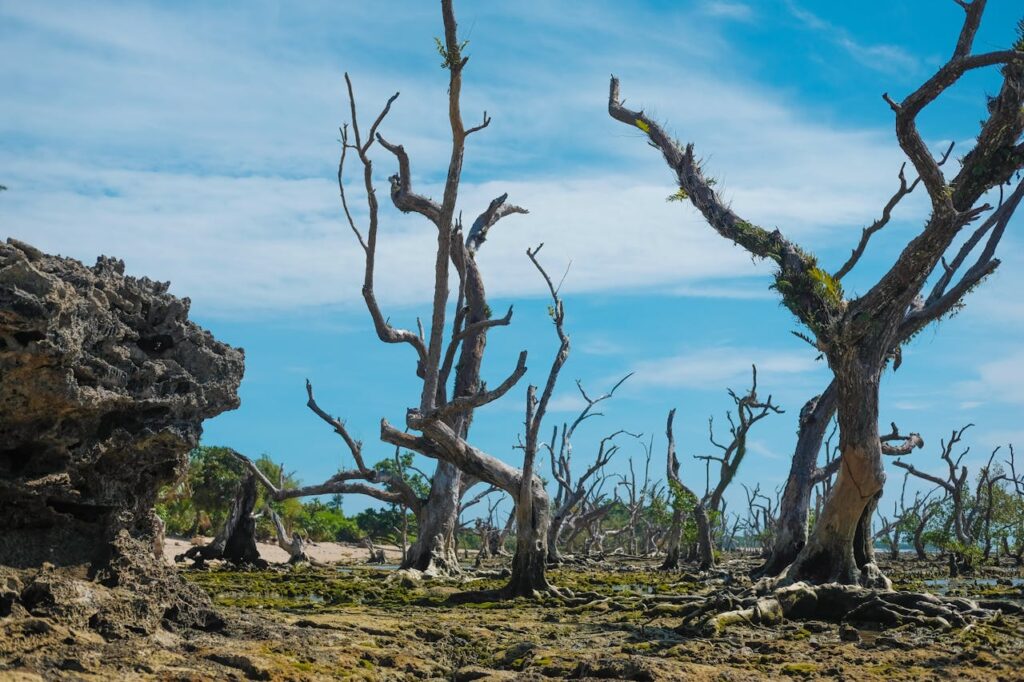
Image by Brendo Boyose on Pexels. (All photos and videos on Pexels can be downloaded and used for free).
It had been decades since rain fell on the town of San Quebrado, but the dead trees did not mind. You can tell a tree is dead by the lack of leaves, the smooth patches and vertical cracks on its trunk, the overall stillness when you stand beside it. There is no shade under any tree and the wind does not blow in San Quebrado, so it is always hot.
Some people assume a dead town would be cooler. It should be cool, like cadaver-cool, my tito used to joke. That makes no sense, I finally explained to him after what was probably the twentieth time he made the joke. A dead body adjusts to the ambient temperature during algor mortis, and does not remain cool throughout. I was eager to show off what I had learned about medicine and science. He sighed and smiled sheepishly, his shoulders sagging a little. I didn’t mean to be rude. I should have just chuckled in agreement.
Eventually we reached that town, where trees are memories and flowers are echoes. By now, I know what that place meant to my tito, how he knew he would go back one day, and how he was the only living boy to escape San Quebrado.
*
When I was a child, I didn’t know Tito Coro was a bit of a living legend. People whispered about him, and he was right up there with the Girl who made the Poison Rainbow and the Sister of Eternal Seascapes that drove one mad with bliss. He had entered the mysterious San Quebrado, a hell town or sacred land depending on who you asked, and he was the only one to come out alive. But to me, he was simply my father’s older brother. I didn’t even know he was adopted until much later, and that didn’t matter anyway. He was my only and favorite tito, who always had sweets in his pockets and a story to fill the lazy afternoon. “Here, don’t tell your nanay,” he would whisper as he handed me a handful of macapuno candies or pastillas. He used to tell the most fantastic stories, about quests and adventures, angry gods and cunning tricksters. I used to love them all.
But gradually, I grew tired of such tales and the everyday magic that made our lives chaotic. I began to hate the diwata’s caprice when her mood turned to thunder and floods, destroying the crops my father spent months caring for. I did not understand why, whenever something bad happened, it was because of a curse of some sort. I wanted the logic of science, the comfort of cause and effect. I took off the kabal my mother wrapped around one wrist, which was supposed to protect me from cuts and I learned how to clean my wounds with water and wrap them with bandages. I learned about herbs from the albularyo but was deaf to his orasyon.
I was only eleven when I told my father I wanted to study medicine, real medicine, I insisted. He did not understand. He said if I wanted to leave, I’d have to make my own way and he refused to speak to me about it.
But Tito Coro took me aside, and gave me a handful of gold coins. “Go on, then, if you must. There are times we need to leave to become who we truly are.” He had sold his most precious possession, a vial of enchanted mud, and with his earnings sent me to the lands of no magic, where engines ran on burning fuel. I was afraid of what my parents would say, but he assured me that he would talk to them, that they too, would eventually understand.
Seven years after I left, my father got terribly sick. I was only halfway through my studies but I took leave and went home. Neither magic nor science could cure him. I could only help make his last days comfortable, with my medicines and knowledge. “It’s your presence that comforts him the most,” my mother said right before he passed. I hoped so.
I assumed Tito Coro would help me and my mother with the funeral arrangements, but she explained that he was having trouble remembering things now. He had the same smile and gave me a handful of sweets when I greeted him, but the years showed on the corners of his eyes and mouth. He seemed healthy for his age but the clouds in his mind grew, and it took him a few seconds to remember things, such as the date, what he had for dinner, and sometimes, my name.
Everyone in our area knew his story, with varying details: How he was a child soldier or a slave boy or the son of a chief from a small village beyond the Ice. How he escaped, got lost, and stumbled into a town of dead trees, stone houses, and quiet townsfolk who cast no shadows. How could they when it was always noon? How he tried to flee the town before they realized he was not one of them. How he had to fight a hundred hungry ghosts when they found out he was flesh and blood and life. He was the only person to enter, and leave, San Quebrado alive.
But details are lost in the telling and retelling. When I finally asked him to tell me what really happened, he told me everything, in bits and pieces, as best as he could. Maybe he was tired of all the embellishments and invented details. Maybe he was just waiting to tell someone his truth.
*
Shortly after father’s funeral, Tito Coro gave away or sold everything he owned, and told everyone that he was going on a trip. But mother told me where he was really going.
“Why would he want to go back there?” I asked.
“He’s sick. Not his body, his mind. And he said he’d promised he’d return,” she explained. “That’s why they let him leave in the first place.”
That wasn’t in the stories I heard growing up. Had he not fought his way out, triumphing against ghosts and death and the town of no escape? But my mother didn’t explain. “Will you go with him? Not into San Quebrado, of course. Journey with him. Take care of him. Make sure he’s all right. Make sure he gets there in time,” she said.
I know what she meant. I had to bring him to that town before he forgot everything. But did it even exist? It was probably another one of the many tall tales he had told me as a child. Or perhaps it was real, but not a ghost town. Just a regular town, with people such as us.
Whatever the reason and wherever he was going, I wouldn’t let my elderly tito go alone. His body was strong enough for the trip but he was repeating the same stories and jokes, or greeting people like it was the first time he had seen them in ages, even if they had seen each other the day before. It was only a matter of time before the cloudy days outnumbered the clear ones. So, we set off, and on one of the clear days, I asked him to tell me his story again, the real one.
“The ghosts, if you can call them that, are beings of light, heat, and memory,” my tito explained. We had been on the road for about a week then. “When I first entered the town, I didn’t know this. I didn’t know anything about the town, or the ghosts. I just wanted a place to hide in. I had too many memories I wished to forget.” He was quiet for a while.
“I did terrible things during the war. I was too young to know how terrible, but I realized at some point. So, I ran from the front when I had a chance. It was risky, I would have been killed if I was caught. But I didn’t care at that point. I ran and ran, until my shoes wore down, and I stumbled into San Quebrado barefoot. They called it a ghost town, a dead town. It was so hot though. Shouldn’t death be colder? Or cooler, at least?” he joked, as we kept on going. He was lost in the clouds again.
Our first stop along the way was a town smaller than ours. They were wary of visitors, but welcomed us once I explained that I was studying medicine and healing. There was no inn but the mayor offered us dinner and a room in his home, the biggest one in that town. We stayed the night and the next day, before we headed out, I saw a few people with minor aches and pains, while my tito told stories to the children. Before we left, the mayor gave us a basket of food and asked if we could also bring some letters and messages with us to the next town we would pass along the way. Badageros were few and far between, the mayor explained apologetically. We said it was no trouble. As we were about to go, an old woman called out to me.
“Can you pass my message too? Can you give my song to a tree?” she asked. “I can’t travel far anymore, unfortunately. But along the road, after three days, you’ll pass by a molave forest. There’s a tree there, taller than the others, with silver leaves. You’ll see it from the road and it’s easy to get to if you focus on it. You just have to sing my song to the tree, that’s all.”
I hesitated. The old woman’s request wouldn’t take much effort but it unsettled me.I imagined my peers in school scoffing, or amused. Was this song magic or madness? Did it matter? I said I would try. The woman sang three times. The first time, I wrote down the words. The second time, I took note of the music. The last time, I listened to the spaces between the notes.
“I won’t be able to sing it as well as you do,” I said.
“That’s all right. Sing it anyway. And tell him that Blanca kept her promise,” she said.
After three days, we came upon the forest. My tito waited on the road with our horses as I went into the forest, eyes set on the top of the tallest tree and its silver leaves peeking above the others. I took a deep breath, and exhaled slowly. I am doing field research. This is simply naturalistic observation, I thought, the terms steadying my steps. I recalled my lessons in botany and biology. The molave is a hardwood tree. Boil from its bark you can use the decoction to treat stomachaches or mild poisoning, depending on the poison. Use its roots and leaves for an anti-inflammatory, anti-bacterial bath after childbirth. Crush its leaves and use them to treat wounds, or brew them into a tea to bring down fevers, I recited in my head.
When I was finally in front of the towering molave, I looked closely at the silver leaves, careful not to touch them. Silver leaf disease is caused by a specific fungus which releases its spores into the open wounds of a tree, infecting its branches and creeping into its leaves, resulting in the silver sheen and eventual rot. Yet the tree showed no signs of decay and its silver leaves were bright and buoyant, unlike the dull, wilting leaves we passed around in mycology class. Perhaps it was another fungus, in a symbiotic relationship with the tree akin to commensalism or mutualism? I cleared my throat, preparing to sing. Do fungi respond to sound? Perhaps this specific fungi responded to the vibrations and energy produced by sound waves.
I imagined the tree would shiver as I sang, but it was still. I tried not to be distracted by my own thoughts and theories, focusing on the words and rhythm so that my voice would not falter. After the song, I delivered the message in a clear voice, and waited for a few minutes. I saw and felt nothing, only a soft wind that brushed my cheek. Was I relieved or disappointed? The question lingered as I returned to the road and while Tito Coro and I shared a meal before we continued our travels.
*
“They tended to my blistered feet and wounds. There was warm food prepared for me, though I never saw them eat. A pitcher of water by my bedside, but not once did I see any of them take a sip,” Tito Coro said. Why did he always refer to them as “they”? I wondered. And when did he realize that “they” weren’t people? Or that they weren’t alive?
He wasn’t quite sure how to explain. “You have to understand,” he said, “I had forgotten what it was like to live a normal life, in a normal town, so I didn’t realize who or what they were when I came to. Or maybe a part of me knew what they were but didn’t care,” my tito shrugged. “I was so tired. I thought I wanted to escape but once I did… I didn’t want anything anymore. I just accepted what they offered. I would sleep, wake, eat, drink, piss, shit, sleep, repeat. I did that for a long, long time. And they let me. They didn’t ask questions, so neither did I. I was grateful.”
“Did you really fight your way out?”
“Yes,” he said.
“Then why do you want to go back? Did they allow you to leave because you promised to come back one day?”
“Yes,” he said.
“Well which one is it,” I asked, frustrated.
“Many things can be true at the same time,” he said, then kept silent for the rest of the night.
We travelled past the Sunshine City and the Mountain of Diwata Amaya. He told me the old stories. I told him about the wonders of science. He reminded me to turn my shirt inside out when he felt we were lost. I did, but I also looked to the stars, my map, and the compass I had brought and we returned to the path. We met a leper I could not cure with my medicine. A holy man came, and he was healed with a prayer and a swim in fresh water.
*
When I would ask Tito Coro about his life before my grandparents took him in, he would change the subject or simply shrug and say he did not remember. He was young when they found him, barely a teen, short and thin for his age. I’m sure his mind didn’t remember, but his body did. There was a scar on his left shoulder which looked like someone had branded him, once. The hearing in his left ear was weaker than his right, so he sometimes tilted his head during conversations to hear better. His hands shook in the presence of a gun. His frequent headaches and back pain increased as he grew older. There was a scar on his neck as well, from the upper part of the right side, below the angle of his jaw, all the way to the left side.
“I didn’t want to leave San Quebrado,” my tito finally said, once we were nearer our destination. “I was not happy there, but I wasn’t sad, either. I begged them to let me stay. I was a ghost too, I argued. But they said I was not light and heat; I had blood and warmth. And I had too many memories. Memories that kept me up at night and bled into nightmares when I did fall asleep. One day I realized, why not just be a real ghost? I knew how to slit my own throat. So I did. I felt my blood gush out and my eyes grew heavy.”
Tito Coro’s voice was soft and low. One hand subconsciously covered his throat for a moment before falling to his side. I considered the oblique keloid across his throat.
As a child, I once imagined him stumbling, pushing, screaming his way to freedom as ghostly hands pulled at his arms and legs, leaving him with invisible but painful scratches all over his body. But all there was, it seemed, was a single scar. The veil of love and legend and familiarity that had shielded my eyes inevitably fell then: for if he had fought a hundred hungry ghosts, why would there be that one, singular scar instead of thousands of permanent marks, or nothing at all?
Looking closer, I saw them: the smaller, thinner scars indicative of hesitation marks at the superior end of the keloid; their direction and length were consistent with the self-inflicted incisions of a left-handed person, such as my tito. Ghostly hands would leave no trace, but human hands always do.
“Then I opened my eyes and I was alive again,” he said. “I don’t know how. They took my memories. Not all of them, just the worst ones. The ones that wouldn’t let me sleep or dream. Then they told me to go. Go far away and settle in a living town, and make new memories there. And one day, when those new memories began to fade, I could come back.”
Not all ghosts haunt you. Sometimes they want to remember so you can forget.
Perhaps I cannot call Tito Coro a hero. But he believed that like the heroes of legends, he had a quest, one he accepted because it was the only way he could return to the first place he considered home. And because he believed they had sent him out—a crucible to hold the compounds of laughter and tears, his body absorbing light, heat, and memories—he held on to everyday conversations, traces of loved one’s faces, and the taste of pocketed sweets. Until the crucible had thinned, and the cracks, the bright, glowing spots told him that it was time to return.
The rest of the way, we traded memories we cherished. The ones that made us smile. “Do you remember when I gobbled down three llaneras of leche flan and threw up on Tita Juana?” I asked.
“You had such a sweet tooth!” my tito laughed. I laughed. There were many good memories between us.
*
The nearer we got, the drier the air as the temperature increased. The back of my shirt armpits were soaked in sweat and I had to squint under my wide-brimmed hat. Finally, I saw them: The smooth trunks of dead trees with their leafless branches. The stone houses and dusty paths. It was as he described. I scanned the area for traces of people, footprints, or clotheslines with shirts hanging to dry. There was nothing. It was quiet. Did I believe everything else he had said about the town? It did not look like some hellish landscape but it did not feel like consecrated ground. It only felt hot.
“We’re here, Tito,” I said. But his mind was clouded over again.
“Where?”
Mother told me not to go in. She believed that San Quebrado was a place the living couldn’t escape from. But I couldn’t leave Tito Coro at the edge of the town like that. His cloudy spells were longer and more frequent by then. I helped him off his horse, tied both our horses to one of the nearby tree trunks, and took his hand.
Our village believed that the spirit of a dead loved one guided a soul to the afterlife. Here I was, a living guide. If the town could distinguish the living from the living dead, and had grace enough to release my tito before calling him back, perhaps they would allow me to enter and leave. We walked into San Quebrado together. He looked at me.
“I don’t remember your name,” he said sadly. “But I think I know you. Here,” he pointed to his heart.
“That’s okay,” I reassured him, “That’s enough.”
I saw no ghosts; only the shimmering heat around us as we walked—a heat haze caused by the uneven heating of air near the earth, part of me explained. Another part believed it was the town welcoming us, as it began to draw Tito Coro’s memories into itself.
I recalled the molave with its silver leaves and improbable, beneficial fungi. Perhaps my days of science had changed me in a way that meant I would never see ghosts, or I would always find some way to reason out a mystery. Or maybe the ghosts did not wish to show themselves. Perhaps you had to believe they were there. And so I tried. I knew they were there, I told myself. In the stone houses, standing by the trees, silent and welcoming.
As we walked one street after the other, I felt my tito’s hand in mine slowly get smaller and smaller. I was imagining it, I thought at first. But his footsteps became shorter and smaller. As they did, the shimmering in the air increased. Our surroundings grew brighter. The oppressive heat gave way to a more comfortable warmth as a cool, dry wind blew past. A memory of me holding my tito’s hand as a child came to mind. My small hand in his, now his hand in mine.
After some time, we stopped walking and I turned to the boy beside me. The top of his head was level with my shoulders and his hair was wavy and black. He was probably eleven, not more than twelve, the age my tito had first entered this town. The age he died, the age he escaped, the age he was saved. I could not deny what I saw.
“Do you know your way around?” I asked him.
The boy looked at me with my tito’s eyes. “I think so,” he said. “What’s your name again? Would you like to see my house? We can play inside.”
“Maybe next time. I have to get going now,” I explained. “I can’t stay here for long.” From my pocket, I pulled out a piece of candy and offered it to him.
“Thanks, kuya. Bye!” He waved then ran off, his steps quick and light, casting no shadow as he went. What did I see? What did I believe?
It was then that I felt the eyes of a hundred ghosts turn away from me. Without the heat of their gazes, I felt cold. I trembled, my body filled with many thoughts, with much life. I watched the little boy’s figure run happily away, getting smaller as he went deeper into the heart of the town.
Eventually I retraced our steps and found the way out easily, as though a path had been prepared for me. I got on my horse—the other, now riderless horse obediently walking alongside me—and rode steadily towards the scent of water and forests. I would go back the way I came and pass the towns we stopped at. I would gather herbs for healing and whisper a prayer at night. I would tell the old woman I had delivered her song, then head back home. I would ask my mother for a spell of protection, and I would resume my studies, eventually. I would remember the face of my tito, who was once and was now, again, a boy playing in a town of eternal warmth.
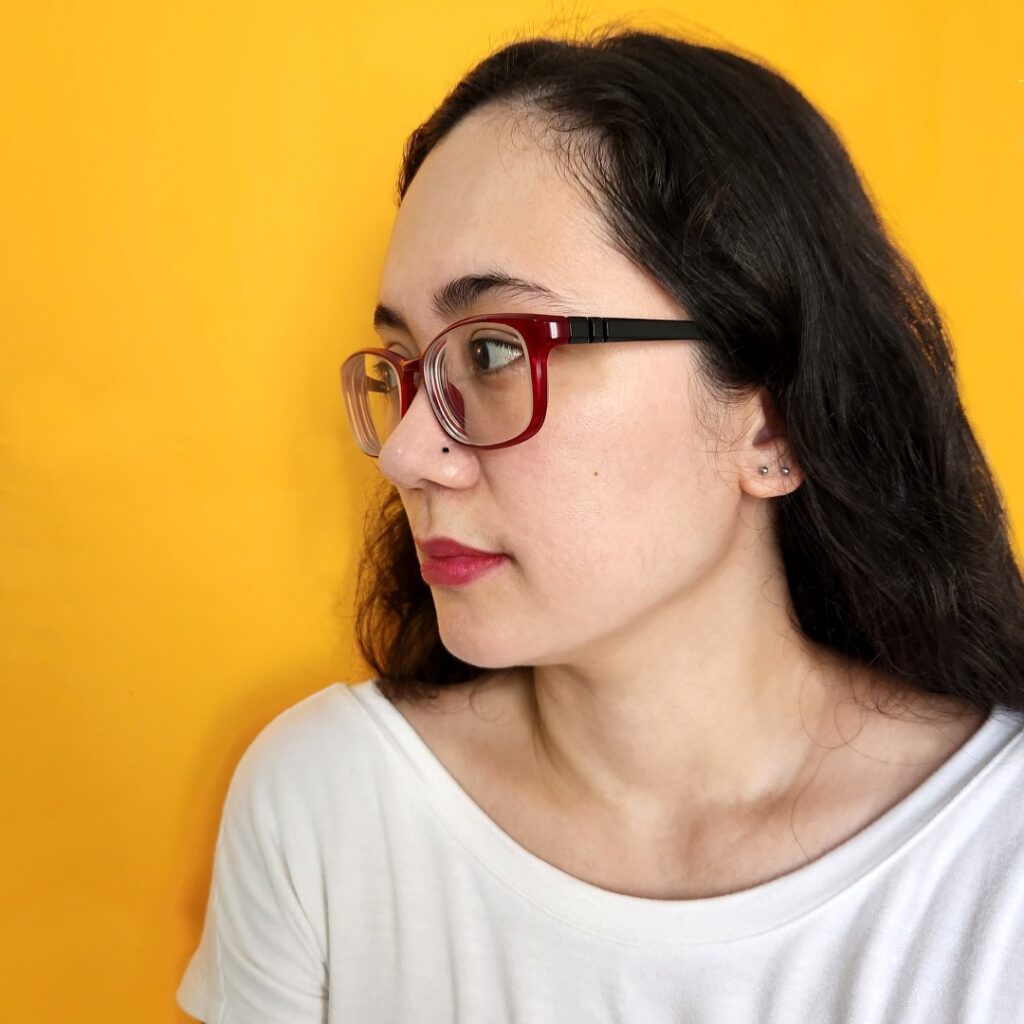
About the Author. Michellan Sarile-Alagao is an editor, educator, writer, wife, and mother. Her work has been published in various print and online anthologies and magazines, and she has written several children’s books that focus on mental health and children’s rights. She was a poetry fellow at the international Roots. Wounds. Words Annual Writers’ Retreat for BIPOC writers in 2023, the 45th Silliman University National Writers Workshop, and the 6th IYAS La Salle National Writers Workshop. She has a BSc. in Criminology and Psychology from the London Metropolitan University and an MFA in Creative Writing from DLSU-Manila. She is a Board Member for the Christian Writers Fellowship and one of the founding members of the Philippine Speculative Fiction Society. She is a program director at Abot Tala, a self-directed learning community. You can find her on Facebook and Instagram @michalagao