
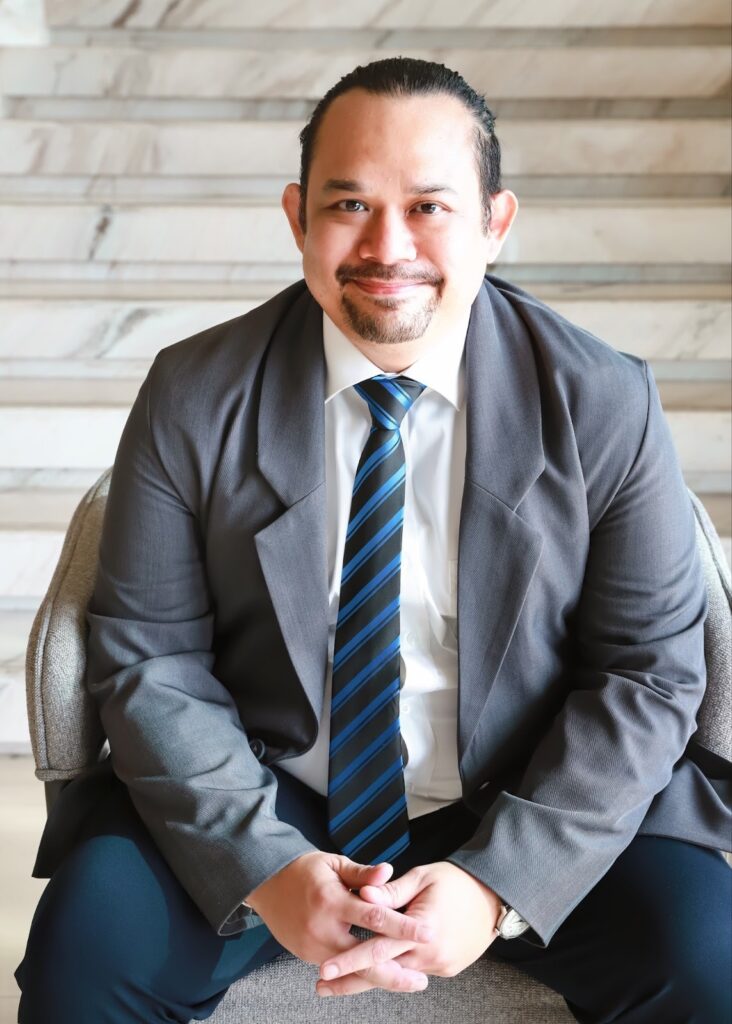
Carl Javier is a multifaceted leader at the intersection of ethics, storytelling, and innovation. Currently the Executive Director and Chief AI Ethicist of Data and AI Ethics PH, Carl advocates for the responsible and human-centered use of artificial intelligence in society. He is also a writer, certified Human-Centered Coach, and educator who teaches Creative Writing at the Ateneo de Manila University. Carl served as CEO of PumaPodcast, the Philippines’ pioneering podcast production company, where he led its growth into a globally recognized storytelling platform. With a career spanning journalism, academia, social enterprise, and publishing, Carl has contributed to meaningful impact through both creative and technical writing. His editorial leadership in relaunching Anino Comics helped launch a new wave of Filipino graphic storytelling, earning national literary awards and acclaim. An accomplished author, Carl has published books of fiction, essays, and poetry, and his work includes projects across print, broadcast, and multimedia platforms. He holds a BA in English Studies and an MA in Creative Writing from the University of the Philippines. Through his advocacy and artistry, Carl continues to shape conversations technology, culture, and ethics in the digital age. His story, “The Pound of Flesh Program“, is Philippine Genre Stories’ December feature.
Welcome to Philippine Genre Stories, Dude! What made you answer the call this time?
I think it’s a few things, among them, months ago, editor Mia Tijam asking me for a story. Like months (maybe a year?) and instead of sending something myself, I recommended something from a student. But she said she missed reading my writing, and I realized I missed writing. Another is that I had quit a job that occupied so much of my mental space, and suddenly I found within that mental space vacuum, this story emerged.
A happy surprise to receive your story! How long has it been since you last wrote a short story anyway? What stopped you and what got you back?
Oof, this is a tough one to answer. I stopped writing fiction in the short story form in 2016. I dabbled in other forms. The simple answer is the immense sadness in the wake of the election of Duterte and then the drug war. I began writing a short story collection in response to the election and the way that the culture shifted. And sometime in between the start of that collection and the time I put it out, I had lost a number of people to the drug war. Beyond those I lost personally, I felt I carried a weight for everyone that we were losing and what our society was becoming. I know that, of course, I couldn’t attribute all that to myself. And yet I felt it was important that we bear that and carry the loss of people. This led to, I guess, a feeling that fiction could do so little. And the circumstances of the real world were so extreme that I wasn’t sure how to respond.
I don’t know if that makes sense or it’s incredibly narcissistic or self-important. One would imagine that artists should rise to the challenge of the moment. But I retreated.
What’s got me back is I guess a mix of things. Time passing. The desire to tell stories again. Finding fun in writing the short story. I write in a lot of different genres and contexts, and fiction is the most demanding, and unfortunately it’s what I can bring my “leftovers to.” So I’m trying to make more effort to have enough left over to write fiction.
Oh many of us would understand this.
And how did you start exploring the genres to begin with? Were there specific books and authors that got you started?
Oh gosh, I’m so old now it’s hard to say. But maybe Ray Bradbury? I distinctly remember reading Martian Chronicles in grade school. My first adult novel I can remember reading was Crichton’s Jurassic Park and I just read it because I found it in the library and it had dinosaurs. I think I also came up in a time that was rich for fantasy, with movies of Neverending Story, Willow, Krull. I was too young to be watching R-rated movies, but I saw Terminator, Alien, a bunch of other stuff like that. And Star Trek and TNG were big for me as a kid. Plus comic books. I guess the simpler answer is it was the 80s and there was a lot of genre stuff in the mainstream.
(Laughing) Old?! Beep! Beep! We’re thoroughly enjoying this lookback! What about Filipino-authored works, which ones that you’ve recently read have you found memorable and why?
I’m biased of course because so many people are my friends… but loving work by Vida Cruz-Borja, Yvette Tan, Kenneth Yu, all the Alfars lol, Eliza Victoria, the list goes on…
As for the why, I’ll be honest, I used to be so jealous of writers like these who were not only consistent in their work, but just brought out so much creativity. Now I can be a little less insecure and just say, man, these people (and many more in the local writing world) are so impressive and make me imagine and inspire me.
Amazing really when we make that kind of turn.
Onto your story: what inspired you to write THE POUND OF FLESH PROGRAM?
I got into the startup/social enterprise space around ten years ago. And in that time I’ve managed lots of people and also run a company. I had quit the last company I was running and I suddenly had this idea of the kinds of compromises and bargains we are forced to make sometimes to keep our companies going. I think most people who wind up crossing ethical boundaries start from good intentions and find themselves straying bit by bit, and justifying it. I’ve written a story playing with Faustian bargains before, so that came to mind. And then I got to thinking, what would the Faustian bargain look like if it were restructured as a modern product?
And which came easy and hard in writing this story?
I think part of why I wanted to write this story was I wanted to better humanize and explore the kinds of things that people who run businesses go through. Often bosses, managers, CEOs, what-have-you, are easily cast as villains. While some definitely are, I wanted to try and show something that most people don’t see, and that’s the struggle of keeping something alive and what people who are committed go through, the lengths they are willing to go, and to literalize the idea of giving of oneself. I went through a version of this when, during the pandemic, I started losing my hair from stress of running a company and trying to meet payroll. So that stuff came very easy, the emotional parts.
What’s hard, honestly, is not having written for a long time and having to trust myself that I could still write. Also hard is trying to be funny and not being sure that people will get the jokes.
Whew!
As someone who’s already had books out, what were the highlights and lowlights of putting a book together to get it published both independently and with a publishing house?
Well I think these are things on a spectrum, and that mostly runs along control. The more indie you are, the more control you have, but then the more money you have to do, the more work you have to take on yourself. On the other end of it, if publishers make the investment, you kind of sit back, but also you have less control. It’s still collaborative, but the publisher will have standards and expectations and targets, whereas indie you’re just doing it for yourself.
I don’t think either is right or wrong, but rather it really depends on what you want. Some people are just positionally more inclined toward one or the other. Sometimes you’ll find a publisher who will indulge your work. Or like me you’ll get lucky and you’ll have an indie print run which then gets picked up by a publisher (Kobayashi Maru did 400+ copies indie, and then got picked up by Visprint for a bigger print run). Also some people just want to write, so they are happy to hand off their work and let publishers do it all. On the other end, you might have something super niche, or close to your heart, and you want it fully.
Is there a next project that you’re working on?
Someone asked me for a book of fiction, and this story is going to be part of it. Also, I have projects and ideas that went through so many iterations and attempts and I’m thinking now is the time to explore if they could live as short fiction. The challenge is, I don’t think the offer is still on the table. But I’m chugging along with the book. In addition, I have a lot of things cooking and when something activates, I jump focus… so lots of projects haha.
(Laughing). Aha! Excited to have a book out of you again!
As a writer, what tips can you share with the new and aspiring storytellers out there?
I think one of the things I used to beat myself up about was volume and productivity. I would see people with so many stories, or like so many books, and I would wonder if I was really a writer. We also are brought up in a system where publishing, awards, all this stuff is made to matter so much in your early career. And where I am is, there’s a lot of living to be done. It’s okay to live and take your time. The stories will be there when you are ready to write them.
In the meantime, keep working on your craft. Explore. Dive into curiosities. Embrace your weirdness. You’ll wind up places you didn’t expect, and that’ll lead to stories you couldn’t have imagined.
And as an editor, what are the top tips you can share?
Respect the craft. I run into people who say, oh I want to be a writer but my grammar sucks. And it’s like, dude, then fix your grammar, work at it. Craft means commitment, it’s doing stuff that is difficult, it’s caring about this to a level that other people don’t understand. It’s fighting about punctuation and how much it matters. An editor sees that almost immediately, and if nothing else, will respect that.
Next is to throw out your first five ideas. You might have a concept, but then draw up five ways to execute that concept. Then chuck them out. Because that’s what anyone else would have thought of. Then you start working.
Obviously I’m talking here about creative work. In my work as an editor of other things, sometimes it’s about speed and getting things out, so in that space, simplest execution is best. I guess maybe that’s another tip, understanding the different contexts in which we write and operate, and bringing the right level and kind of craft to it.
Hear, hear! Anything else that you’d like your current and future readers to know about you?
I don’t know. I feel like I’ve been gone for a lifetime in the literary and speculative fiction world. So I guess, hello, I exist, or hello, I’m back. It’s been a while. I hope to make weird stuff that people might still find interesting.
Thank you so much again, Carl, and it’s awesome to have you and your story cap 2025!